
Northern Lights in Iceland:
A Complete Guide to Seeing the Aurora
By Stefan Bessi
Local Travel Expert
Last updated: September 3, 2026
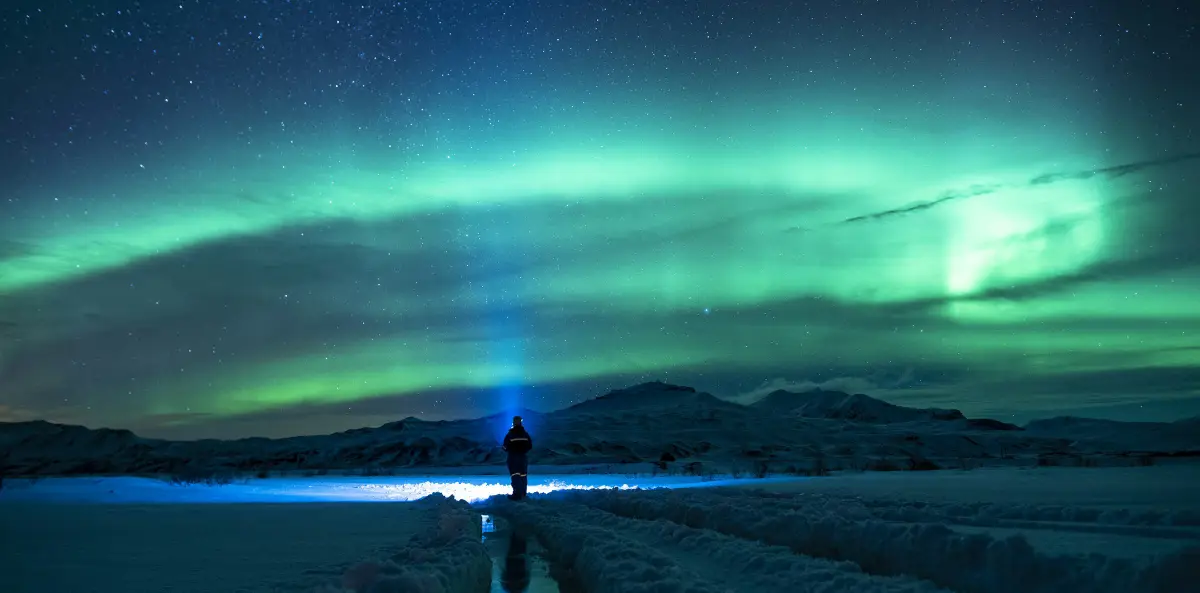
All photography by Jonatan Pie
One minute the sky can look completely empty. Then a faint arc appears above the horizon, grows brighter, and begins to move. On a strong night, bands of green can stretch across much of the sky, shifting shape faster than you expect. On a quieter night, you may spend an hour watching what looks at first like a pale cloud before it suddenly comes alive.
That unpredictability is part of the appeal, but it also creates plenty of confusion.
When should you go out? How much does the Kp index matter? Do you need to leave Reykjavík? Is a cloudy forecast hopeless? And how closely will what you see resemble the intensely colored photographs you have seen online?
Seeing the Northern Lights in Iceland is never guaranteed. But once you understand darkness, cloud cover, auroral activity, and location, you can make much better decisions about when to go looking.
This guide covers exactly that.
Northern Lights in Iceland: Overview
| Swipe to scroll table Topic | Key Information |
|---|---|
| Aurora season | Late August to April |
| Darkest period | November to February |
| What you need | Darkness, sufficiently clear skies, and auroral activity |
| Best place to look | Somewhere dark with a clear view of the sky |
| Can you see them from Reykjavík? | Yes, especially during stronger displays |
| Do you need a high Kp index? | No |
| Do you need a tour? | No |
| Can sightings be guaranteed? | Never |
| Most important forecast to check | Cloud cover together with auroral activity |
Iceland’s official tourism site describes the practical aurora season as running from late August until late April, while the Icelandic Met Office emphasizes the two essentials that travelers sometimes overlook: the sky needs to be dark and at least partly clear.
What Are the Northern Lights?
The Northern Lights, or aurora borealis, begin far above Iceland.
The solar wind carries charged particles that interact with Earth’s magnetic field and direct them toward the polar regions. When these particles collide with gases high in the atmosphere, energy is released as light.
That is the science in brief. What matters when you are standing outside in Iceland is that aurora activity is constantly changing. A display can strengthen, weaken, move across the sky, disappear, and return later the same night.
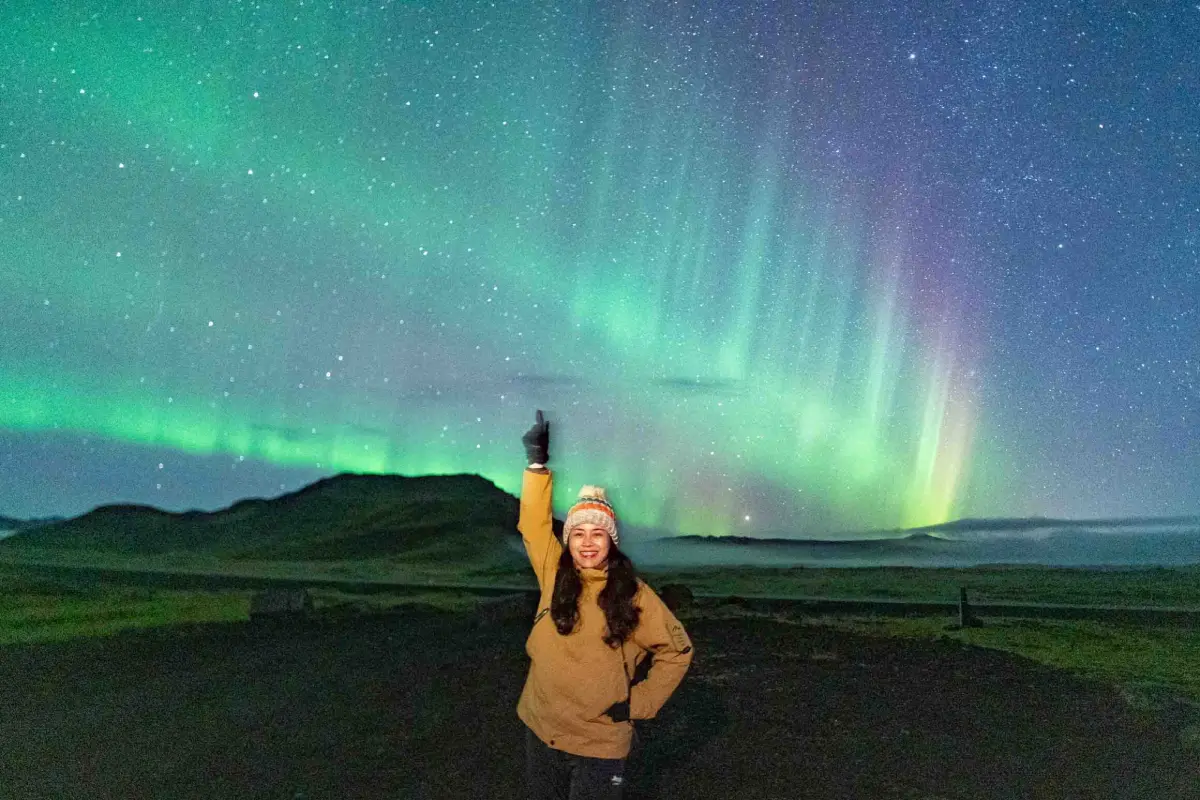
The familiar green color is produced mainly by oxygen and is by far the color you are most likely to see. Stronger displays can also reveal shades of pink, red, violet, or purple.
The lights can take very different forms. Sometimes they appear as a quiet arc across the northern sky. At other times you may see vertical rays, moving curtains, or bands stretching overhead.
And occasionally the entire display seems to accelerate.
Those are the nights people remember.
When Can You See the Northern Lights in Iceland?
The simple answer is when it is dark enough. Aurora activity does not disappear during the Icelandic summer; the problem is that you cannot see it against a bright sky.
Around midsummer, Iceland never becomes properly dark. By late August, darkness begins returning to the night, and the opportunity to see the Northern Lights returns with it.
That does not mean December is automatically better than September simply because it is darker.
Once you have sufficient darkness, cloud cover and auroral activity become much more important.
Northern Lights by Month
| Swipe to scroll table Month | What to expect |
|---|---|
| August | First opportunities late in the month as darkness returns |
| September | Dark nights return quickly, and autumn travel remains relatively easy |
| October | Long nights and a strong balance between darkness and accessibility |
| November | Very long nights, colder weather, increasingly wintry conditions |
| December | Some of the longest periods of darkness of the year |
| January | Long nights and full winter conditions |
| February | Plenty of darkness with noticeably increasing daylight |
| March | Still a strong aurora month with longer days for sightseeing |
| April | Opportunities remain, but the viewing window shrinks rapidly |
| May–July | Too bright for practical aurora viewing |
This is an important distinction if you are planning an entire Iceland trip around the Northern Lights. You do not need to visit during the darkest weeks of winter to have a good chance of seeing them. September, October, February, and March give you dark nights while leaving considerably more daylight for everything else you came to Iceland to see.
What Is the Best Month to See the Northern Lights in Iceland?
There is no single month when the Northern Lights suddenly become reliable.
If your only consideration were the number of dark hours available, midwinter would have an obvious advantage. But an aurora trip does not happen in a spreadsheet.
You also have to deal with clouds, wind, road conditions, and the amount of daylight you want for exploring Iceland. That makes the shoulder months particularly interesting.
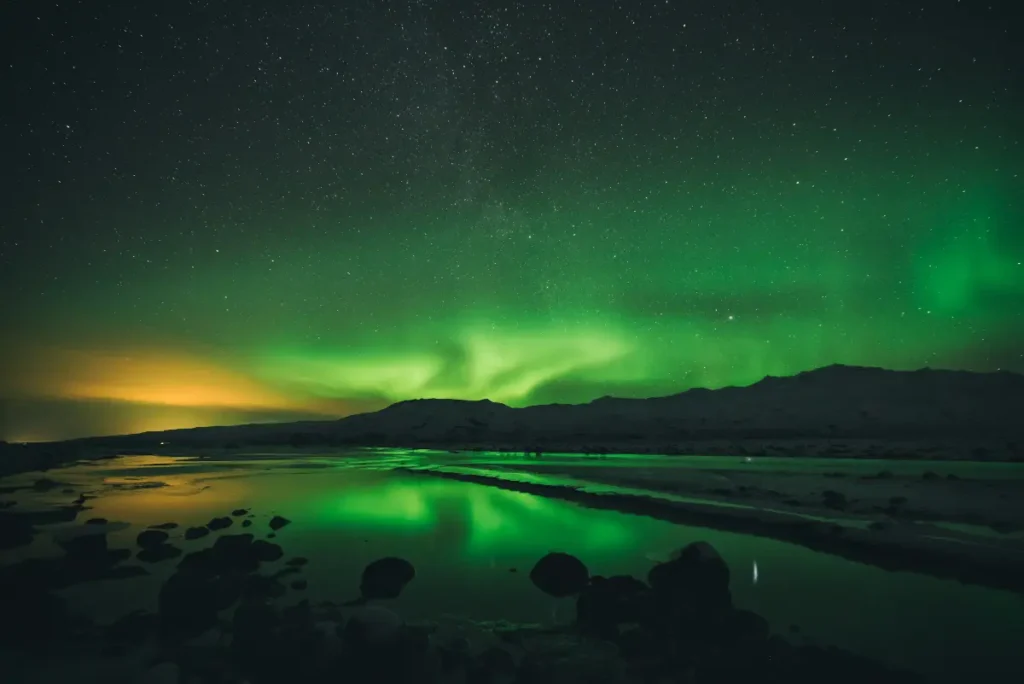
September and October
Autumn brings back properly dark nights without the very short days of midwinter. You can spend most of the day sightseeing and still have darkness later in the evening.
Snow and difficult winter roads are also less dominant than they can become later in the season, although Icelandic weather can deteriorate at any time.
There is another advantage around this time of year. Auroral activity tends to increase around the spring and autumn equinoxes, which can favor September and March even though these months have fewer hours of darkness than midwinter.
November to January
This is the period of maximum darkness.
Around the winter solstice, Reykjavík receives only a few hours of daylight. That creates an enormous window for aurora viewing, but it also means much less daylight for waterfalls, landscapes, hiking, and road trips. Visit Reykjavík lists daylight around late December at roughly four hours. Winter storms can also interfere with travel.
February and March
These are excellent months for combining aurora hunting with a broader Iceland trip.
The nights remain dark, but daylight returns quickly. By March, you have substantially more time for daytime sightseeing while still retaining proper darkness at night.
So which month would we choose?
If the trip is about Iceland as well as the Northern Lights, September, October, February, and March offer an excellent balance. If maximizing hours of darkness matters more than daytime sightseeing, November through January gives you much longer nights.
But no month can promise clear skies. A clear September night can beat a cloudy January week.
That is one of the most important things to understand before planning an aurora trip.
What Time Do the Northern Lights Appear?
The Northern Lights do not operate on a nightly schedule.
You may see them early in the evening, around midnight, or well into the early morning. Auroras tend to be seen most frequently in the Icelandic sky around 23:00, making roughly 22:00 to 01:00 a useful starting window.
But treating those hours as a rule can cost you a sighting.
If the sky is clear and activity looks promising at 20:30, there is no reason to wait for 21:00 because a travel guide told you to.
Likewise, a quiet sky at 22:00 does not mean the night is over. Auroral activity can change surprisingly quickly.
This is why patience matters. If conditions are otherwise promising, give the sky some time before deciding nothing is going to happen.
The Three Things You Actually Need
Aurora forecasts can look complicated, but the basic decision is simpler than it first appears.
You need three things to come together:
1. Darkness
No darkness, no visible Northern Lights.
This is why summer does not work and why the usable viewing window changes dramatically between September, December, and April.
2. A Clear Enough Sky
Clouds are often the deciding factor. You can have excellent geomagnetic activity above Iceland, but if a thick layer of cloud sits between you and the aurora, you will see nothing.
The sky does not need to be completely cloudless. A break in the clouds can be enough. A darker location improves visibility, especially when the aurora is faint, but darkness cannot compensate for clouds. A clear sky near Reykjavík can be far more useful than a perfectly dark location underneath solid cloud.
3. Aurora Activity
Finally, something needs to be happening above you. This is where geomagnetic forecasts, the auroral oval, solar wind data, and the Kp index enter the picture.
The mistake is treating this third factor as if it were the only one. A high activity forecast underneath solid cloud is worthless to someone standing on the ground.
That simple fact should influence almost every decision you make when hunting the Northern Lights in Iceland.
How to Read the Northern Lights Forecast in Iceland
Before heading out, one of the most useful places to check is the aurora forecast from the Icelandic Meteorological Office. The forecast combines two pieces of information you need: cloud cover and predicted auroral activity.
The cloud map deserves more attention than people often give it. On the Met Office aurora map, green represents cloud and white represents clear sky. That can initially feel backwards if you expect green to mean good conditions.
Do not just look at conditions above Reykjavík. Look across the region you could realistically reach. A cloudy capital with a clear patch inland may justify driving east. If the south is covered but Reykjanes has clearer skies, heading southwest may be the better decision.
Check how the clouds are expected to move through the evening rather than looking at a single snapshot. Aurora forecasts are most useful close to the night you plan to go out. Conditions several days ahead can change significantly, so do not write off a particular evening based on a forecast you checked earlier in the week.
That is much closer to how you should actually plan an aurora hunt:
not “Where is the best Northern Lights spot?” but “Where are the clearest skies tonight?”
Do You Need a High Kp Index in Iceland?
No.
This is one of the most useful misconceptions to get rid of before your trip. The Kp index runs from 0 to 9 and measures disturbances in Earth’s magnetic field. Higher values indicate stronger geomagnetic disturbance and, broadly speaking, an auroral oval extending farther from the poles. The Icelandic Met Office notes that Kp values spend much of their time between 0 and 3, with the highest values occurring rarely.
But Iceland is already very far north. You therefore should not read Kp 2 as “2 out of 9. Bad night.” That is not what the number means.
Visitors should not rely on the Kp index alone, pointing instead to real-time space-weather information such as the Bz component of the interplanetary magnetic field.
If you want to look beyond Kp, real-time solar wind conditions can provide additional clues. One useful signal is Bz: when it turns southward, or negative, conditions can become more favorable for auroral activity. For most visitors, however, clear skies and darkness should still come first.
This matters because people sometimes make exactly the wrong decision:
Low Kp forecast → stay in hotel.
Or:
High Kp forecast → drive for an hour despite complete cloud cover.
Neither approach is particularly useful.
A modest activity forecast, dark sky, and a large clear patch above you can produce a successful night. A much higher number behind thick cloud produces a very good view of clouds.
Consider two options:
Location A: High auroral activity, completely overcast
Location B: Lower auroral activity, clear and dark
We would head toward Location B.
Aurora hunting is as much about reading Icelandic weather as it is about watching space weather.
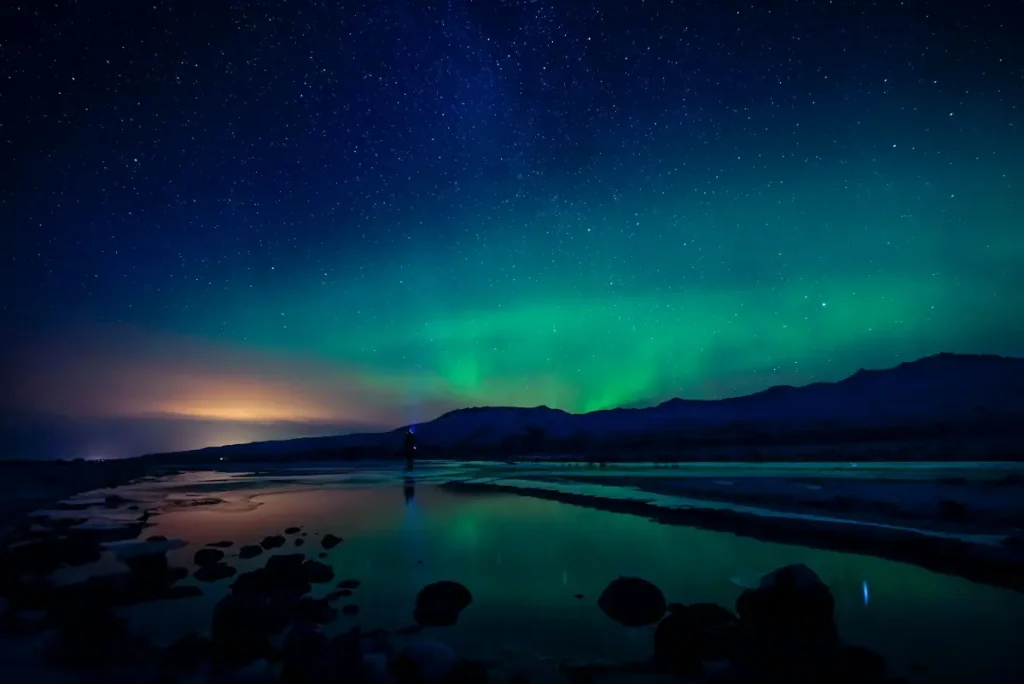
Where to See the Northern Lights in Iceland
There is no single best Northern Lights location in Iceland.
On a clear, active night, aurora can appear above Reykjavík, the Golden Circle, the South Coast, Snæfellsnes, North Iceland, the Eastfjords, or a roadside guesthouse far from any town.
What changes from place to place is your view of the sky, local light pollution, cloud cover, accessibility, and surroundings.
A dark beach beneath mountains may make a better photograph. An open field may give you a wider view. A location five minutes from your hotel may turn out to be the smartest choice if the aurora suddenly appears.
This is why we would not plan an Iceland itinerary around a list of supposedly perfect aurora spots. Plan around good regions and multiple opportunities instead.
Reykjavík
Yes, you can see the Northern Lights from Reykjavík.
City lights make faint aurora harder to see, but stronger displays can be visible directly above the capital. You can improve your chances without traveling far by moving toward darker edges of the city and places with an open view of the sky.
If activity suddenly strengthens while you are in Reykjavík, go outside. Do not assume you have already missed your chance because you did not book a car.
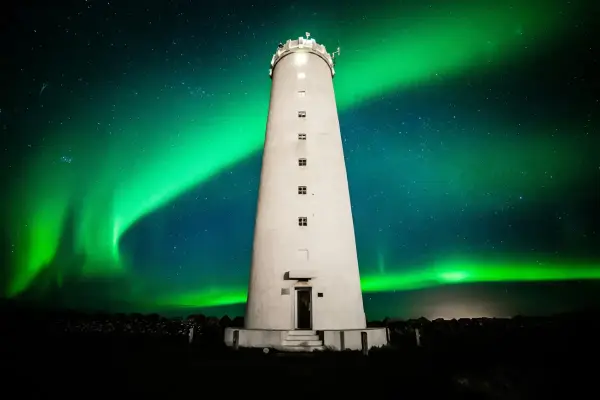
Tip: Grótta Lighthouse in Seltjarnarnes remains a popular spot to see the Northern Lights in the Reykjavík area, just a short drive from the city center.
Reykjanes Peninsula
Reykjanes gives you dark coastal landscapes within relatively easy reach of Reykjavík.
The peninsula can be useful when skies southwest of the capital are clearer than inland areas. But exposed roads, wind, winter weather, and changing conditions need to be taken seriously.
The best direction on any particular night still comes back to the forecast.
The Golden Circle
The Golden Circle offers large areas of dark countryside relatively close to Reykjavík. Þingvellir, Laugarvatn, and the countryside around Gullfoss can all provide excellent viewing conditions when skies cooperate.
The advantage is not simply darkness. You can explore the Golden Circle during daylight and remain in the countryside after dark rather than returning immediately to Reykjavík.
We have a separate guide covering specific locations, practical stops, and planning:
Read: Best Places to See the Northern Lights on the Golden Circle →
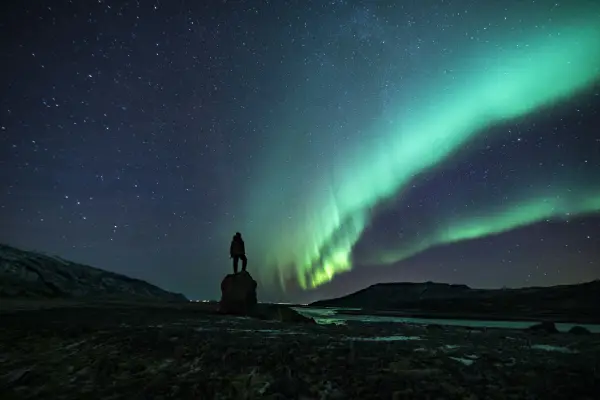
Golden Circle & Northern Lights
Two unforgettable Icelandic experiences in one day. Explore the Golden Circle by day, then head out at night in search of the Northern Lights.
Golden Circle & Northern Lights
South Coast
Once you move away from the larger settlements, much of the South Coast has very little artificial light.
Waterfalls, mountains, black-sand landscapes, and open countryside also create excellent foregrounds for photography.
There is one catch: a beautiful location is useless underneath cloud.
Do not drive past a clear sky because you have decided in advance that the aurora must be photographed at one particular waterfall.
Snæfellsnes Peninsula
Snæfellsnes has some exceptional night landscapes, from coastlines and lava fields to mountains.
It also involves more driving from Reykjavík and can be exposed to difficult weather. It makes more sense as an aurora location when you are already staying on the peninsula than as a destination to chase blindly from the capital late at night.
North Iceland
Akureyri, Lake Mývatn, and the surrounding countryside put you deep inside northern Iceland with plenty of dark-sky locations.
Being farther north does not remove the two familiar problems: clouds and weather.
If you are spending several nights in North Iceland, however, you have something far more valuable than a famous viewing spot: multiple chances to go outside when the sky clears.
The Most Important Northern Lights Advice: Give Yourself More Than One Night
If seeing the aurora matters to you, do not build the entire plan around one evening. You can choose the right month, stay somewhere dark, understand the forecast perfectly, and still arrive during two days of cloud.
Nature does not care that Thursday is your Northern Lights night.
Four nights based in one region can give you a better chance than one carefully planned night at a famous viewing location. What you need most is the opportunity to take advantage of the night when the weather finally cooperates. Three or four nights in Iceland give you several opportunities to respond to changing conditions. A week gives you considerably more flexibility.
This is also why we would avoid saving the Northern Lights exclusively for your final evening.
If the first night is clear, go out.
You can always see them again.
You cannot recover a clear night after it has passed.
Tip: If you are staying in the countryside, it is also worth asking your accommodation if they offer a Northern Lights wake-up call. That can save you from spending every clear night watching the sky from your window.
Should You Take a Northern Lights Tour or Drive Yourself?
You do not need a tour to see the Northern Lights in Iceland. If you have a rental car, feel comfortable driving after dark, and know how to read the weather forecast, searching independently gives you complete freedom over where you go and how long you stay.
A tour removes much of that decision-making. A local guide can follow changing cloud cover, choose a viewing area based on the conditions that evening, and explain what is happening in the sky while you wait.
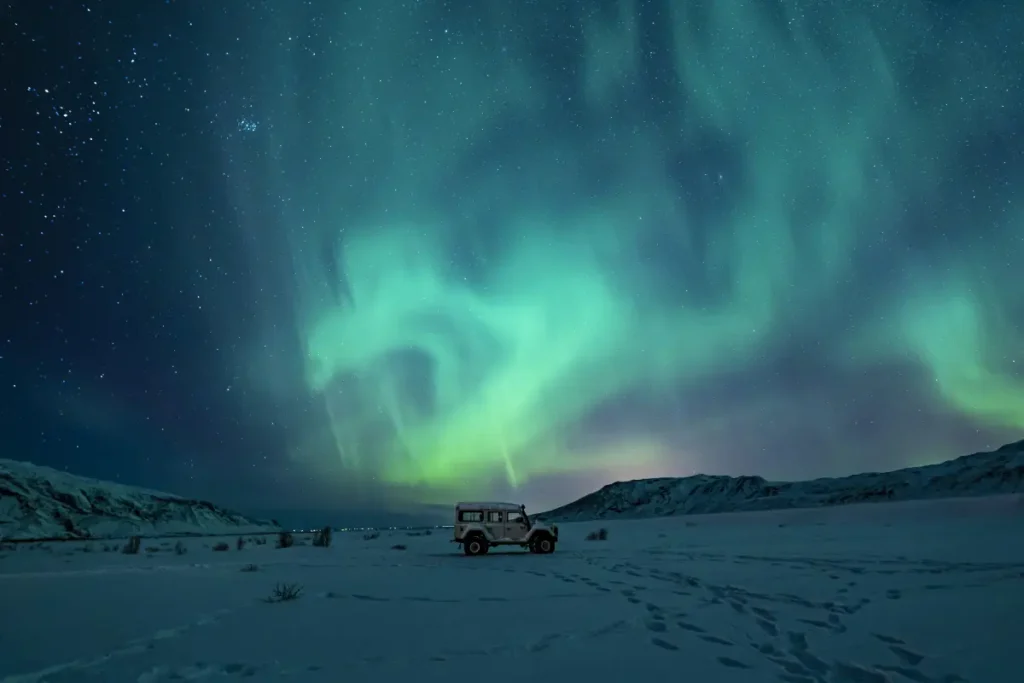
On a private tour, the evening can also respond to your group rather than a fixed schedule. You can ask questions as you go, stay longer when conditions are good, and move to another area when the forecast gives you a reason to.
The difference becomes more important in winter. Driving outside Reykjavík on a clear September evening is one thing. Driving unfamiliar roads at night during an Icelandic winter is another. Snow, ice, wind, poor visibility, and rapidly changing conditions can make a seemingly simple drive considerably more demanding. Official Icelandic travel guidance recommends checking both weather and road conditions before setting out.
If you drive yourself, the freedom is valuable. If you would rather spend the evening looking at the sky than studying maps, forecasts, and road conditions, a guided tour has a clear advantage.
There is no universally better way to see the Northern Lights. The important part is getting safely under a dark, clear sky and giving yourself enough time to wait.
Northern Lights Hunt
Northern Lights Hunt is a private evening tour from Reykjavík into the Icelandic countryside to search for the magical Aurora Borealis away from city lights.
Northern Lights Hunt
How Far Should You Drive From Reykjavík?
Not as far as you might think. You do not need to drive deep into the Icelandic countryside simply to escape Reykjavík’s lights. Once you move beyond the brighter urban area, the sky becomes noticeably darker.
More importantly, distance is not the goal. Clear sky is.
If conditions are excellent 30 minutes from Reykjavík, there is little reason to drive another hour just because a location farther away appears on a list of the “best places” to see the aurora.
The opposite can also happen. Reykjavík may be covered by cloud while clearer skies sit farther inland. On a night like that, driving farther can make all the difference.
Let the forecast decide the direction, then find a safe, dark place with a good view of the sky.
What Do the Northern Lights Really Look Like?
This is worth discussing because photographs have changed people’s expectations of the aurora.
A camera can collect light over several seconds and reveal colors that your eyes perceive much more faintly. That does not mean Northern Lights photographs are fake. It means a camera and the human eye see low light differently.
A weak aurora may initially look like a pale grey or greenish band. If you are unsure what you are looking at, point your phone toward it. Night mode can sometimes reveal green immediately.
A stronger display is a completely different matter.
Green can become obvious to the naked eye. Arcs develop into rays and curtains. The lights may move quickly enough that you can watch their shape changing from second to second. During particularly strong displays, pinks and other colors can also become visible.
So if your first reaction is:
Is that a cloud?
Do not be disappointed.
Keep watching.
Some of the best displays begin quietly.
Does Moonlight Ruin the Northern Lights?
Not necessarily. A bright moon increases the amount of light in the landscape and can make very faint aurora harder to distinguish. But strong Northern Lights can remain clearly visible under moonlight.
There can even be an advantage for photography: moonlight illuminates mountains, snow, waterfalls, and other foregrounds that would otherwise disappear into darkness.
A full moon is therefore no reason to stay inside. Cloud cover matters far more.
How Long Should You Wait, and When Should You Move?
A quiet sky does not mean the night is over. Aurora activity can change quickly, and leaving after ten minutes because nothing has happened yet can mean leaving just before the display begins.
If the sky above you is dark and clear, give it time.
Moving becomes worthwhile when there is a reason behind it. Cloud may be approaching your location while another area is clearing, or you may discover that artificial light is interfering more than expected.
What rarely helps is driving constantly in search of a supposedly better location. If you already have clear skies, darkness, and promising conditions, you may be better off staying where you are.
Standing under complete cloud for hours is not patience either. Keep checking the forecast and watch how conditions are developing around you.
Chase clear skies, not famous locations.
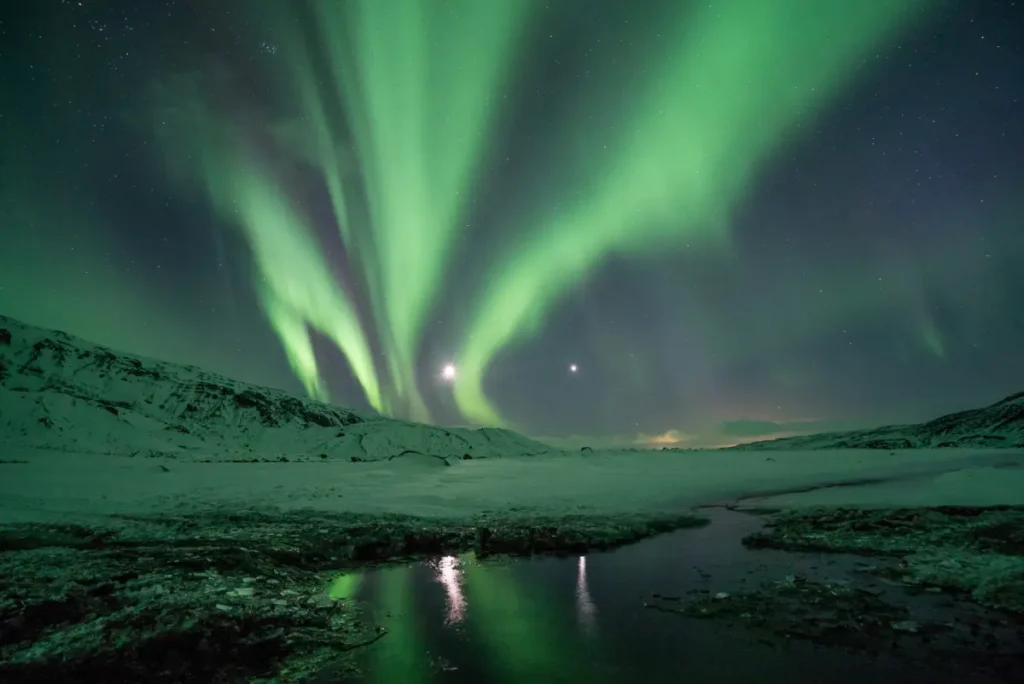
How to Photograph the Northern Lights
Photographing the aurora is easier than it used to be, and both modern cameras and smartphones can produce excellent results with the right settings and a steady hand.
How to Photograph the Northern Lights With a Camera
You do not need professional equipment, but a camera that allows manual control will give you much more flexibility.
These settings give you a useful starting point:
| Swipe to scroll table Setting | Starting point |
|---|---|
| Aperture | f/1.8–f/2.8 if available |
| ISO | 800–3200 |
| Shutter speed | 2–10 seconds |
| Focus | Manual, focused near infinity |
| White balance | Around 3500–4000K |
| File format | RAW if available |
Treat those numbers as a starting point, not a recipe.
If the aurora is faint and barely moving, a longer exposure can collect more light. If it is bright and moving quickly, shorten the exposure. A 10-second exposure can turn detailed moving curtains into a soft green blur.
That is one of the most common mistakes in Northern Lights photography: using too long an exposure when the aurora becomes strong.
Turn off flash, use a short timer or remote shutter release, and check your images as conditions change.
A tripod makes a significant difference, especially when longer exposures are needed. If you do not have one, a wall, car roof, rock, bench, or securely placed backpack can help keep the camera still.
Do not spend the entire display looking at the back of your camera.
Tip: Cold weather can drain camera and phone batteries surprisingly quickly, so start with a full charge and carry a spare battery or power bank if you expect to stay out for several hours.
How to Photograph the Northern Lights With a Phone
Modern smartphones can photograph the Northern Lights remarkably well.
Start by keeping the phone as still as possible. A tripod is ideal, but resting it securely against a solid object can also help. Activate night mode if your phone supports it and allow a longer exposure when the aurora is faint.
When the aurora becomes bright and fast-moving, longer is not necessarily better. A shorter exposure can preserve more of the structure in the lights.
And clean your lens.
It sounds trivial, but fingerprints, condensation, snow, and moisture can turn every light source in a night photograph into a hazy mess.
What Should You Wear to See the Northern Lights?
Dress for standing still, not for the temperature you felt while walking around Reykjavík during the afternoon. That distinction matters because aurora watching can mean spending a long time outside with very little movement. A temperature that feels manageable during a daytime walk can become uncomfortable surprisingly quickly when you are standing in an exposed field at midnight.
Wear warm base layers, an insulating middle layer, and a windproof outer layer. Add gloves, a warm hat, thick socks, and suitable winter footwear.
Wind can change everything.
A calm night around freezing may feel manageable. Strong Icelandic wind at the same temperature is a very different proposition.
Tip: Bring more clothing than you think you need. You can always leave an extra layer in the car. Wind chill can make a cold night feel considerably colder, especially when you are standing still for long periods.
Northern Lights Safety: The Sky Is Not the Only Thing to Watch
Aurora hunting happens at night, often in unfamiliar countryside, and people naturally spend much of the time looking upward.
That combination creates some very ordinary risks.
Never stop your car on the road because the Northern Lights suddenly appear. Continue until you find a proper parking area or another place where you can pull completely and safely off the road.
Do not assume an unmarked track is suitable because another vehicle has driven down it.
Be careful around icy paths, cliffs, shorelines, rivers, waterfalls, and uneven ground. Places that are easy to navigate during daylight can feel completely different at night.
And before driving anywhere in winter, check the current weather and road conditions. Iceland’s official driving guidance stresses checking both before traveling.
No photograph is worth creating a dangerous situation on the side of an Icelandic road.
Common Northern Lights Mistakes
A few mistakes come up again and again.
Waiting for a high Kp number.
You can see the Northern Lights in Iceland at relatively low Kp levels. Clear sky is often the more important question.
Looking only at the aurora forecast and ignoring clouds.
Strong activity above a solid cloud layer will not help you.
Planning only one night.
One cloudy evening can wipe out your entire opportunity.
Driving to a famous location regardless of conditions.
Kirkjufell, Þingvellir, or a black-sand beach cannot move the clouds out of the way.
Leaving too quickly.
A quiet sky at 22:30 can look very different half an hour later.
Expecting the sky to look exactly like a long-exposure photograph.
Weak aurora can be much subtler to the naked eye.
Watching through your phone.
Take your photographs, then put it down for a while.
That last one is not scientific advice. It is simply worth doing.
What If You Don’t See the Northern Lights?
Sometimes everything seems to line up. You find a dark location, the sky is clear, and you wait.
Nothing happens.
On another night, auroral activity may be excellent while Iceland sits underneath a blanket of cloud. There is no trick that fixes either situation.
If you have another night available, try again. Some guided tours also offer another attempt after an unsuccessful outing, but policies vary and should be checked before booking.
Most importantly, do not assume you chose the wrong place or did something wrong.
There are nights when the Northern Lights simply do not cooperate.
Northern Lights by Minibus
Leave Reykjavík behind on a small-group evening tour into the Icelandic countryside in search of the Northern Lights.
Northern Lights by Minibus
Final Advice for Your First Northern Lights Night
Do not make your first aurora hunt more complicated than it needs to be.
Check the weather and cloud cover. Look at the auroral activity. Find a dark, safe location beneath the clearest sky you can reasonably reach. Dress warmly, then give it time.
You may spend an hour talking in the dark before anything happens. You may see the lights before you have even left Reykjavík. Or a faint arc may suddenly grow brighter and begin moving across the sky.
There is no way to remove that uncertainty.
And that is part of the reason people keep going outside to look.
Golden Circle and Northern Lights
Read More →Northern Lights in Iceland FAQ
What months can you see the Northern Lights in Iceland?
The practical season runs from late August until late April, when Iceland has enough darkness for aurora viewing. The brightest summer months are too light.
What is the best month to see the Northern Lights in Iceland?
There is no single best month. September, October, February, and March provide a useful balance of dark nights and daylight for sightseeing, while November through January offer the longest periods of darkness.
What time are the Northern Lights most likely to appear?
There is no fixed time, although late evening is often a useful starting point. Displays can appear earlier or continue well into the night.
Do you need Kp 3 to see the Northern Lights in Iceland?
No. Iceland’s northern location means aurora can be visible at lower Kp levels. Don’t rely too heavily on the Kp index.
Can you see the Northern Lights from Reykjavík?
Yes. Strong displays can be visible from the city, although moving away from bright urban lighting makes faint aurora easier to see.
Can you see the Northern Lights when it is cloudy?
You need a sufficiently clear part of the sky between you and the aurora. Broken clouds can still leave openings, but a solid overcast layer blocks the view.
Does a full moon stop you seeing the Northern Lights?
No. Moonlight can make faint aurora less obvious, but stronger displays remain visible. Moonlight can also illuminate the landscape for photography.
Are the Northern Lights actually green to the naked eye?
Strong displays can look clearly green. Fainter aurora may appear pale, greyish, or almost white because human color vision is less sensitive in low light.
Are Northern Lights tours worth it?
They can be, especially if you do not have a rental car, prefer not to drive on Icelandic winter roads at night, or want a guide to interpret the conditions and choose a viewing area.
Are the Northern Lights guaranteed on a tour?
No. The Northern Lights are a natural phenomenon and sightings cannot be guaranteed.
How many nights should I stay in Iceland to see the Northern Lights?
There is no number that guarantees a sighting. If seeing the aurora is important, several nights give you a much better opportunity to work around cloud cover and changing activity than relying on a single evening.
–