
Golden Circle in One Day: A Step-by-Step Itinerary

By Stefan Bessi
Local Travel Expert
Last updated: June 11, 2026
Intro
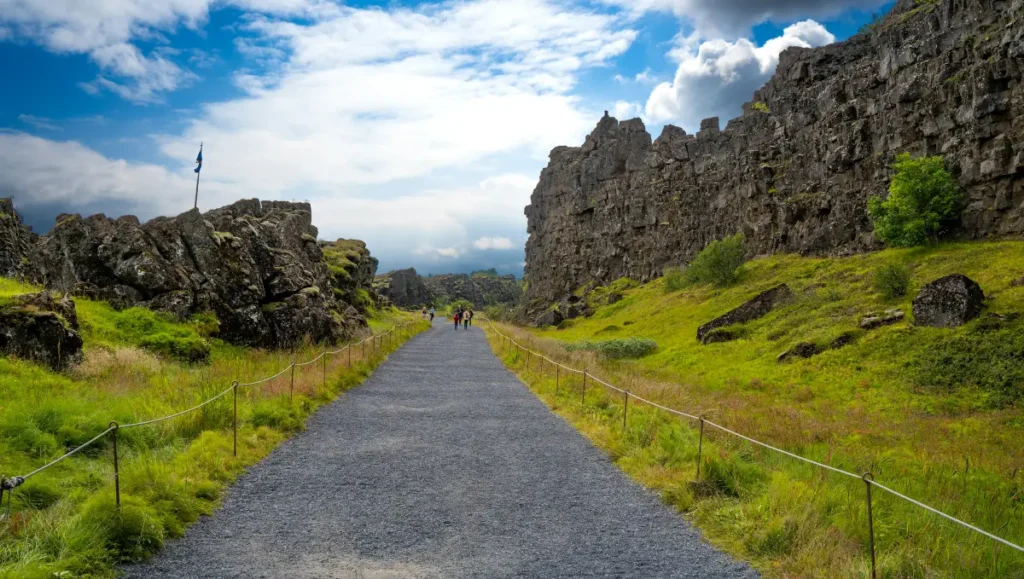
A lot of first-time visitors expect the Golden Circle to feel like three quick roadside stops connected by an easy drive from Reykjavík. In reality, the day usually becomes longer, fuller, and slightly more tiring than people anticipate once cafés, viewpoints, short walks, changing weather, and optional detours start shaping the pace of the route.
The route itself is not difficult to drive, which is partly why many travelers underestimate how much timing affects the overall experience. The difference between arriving at Gullfoss at 10:30 versus 14:00 during summer can feel surprisingly significant once larger tour buses begin filling the main viewing areas.
We generally think the best Golden Circle days are the ones that leave room for flexibility rather than trying to maximize the number of stops. Þingvellir, Geysir, and Gullfoss already make for a full and satisfying route on their own, while a few carefully chosen detours usually work better than trying to see everything in a single day.
This step-by-step itinerary follows the classic Golden Circle route while also covering realistic timing, optional stops, food recommendations, parking information, and some of the smaller details visitors often do not think about until they are already on the road.
Before leaving Reykjavík, it is always worth checking weather conditions on vedur.is and road conditions on SafeTravel, particularly during winter when daylight hours are limited and conditions can change quickly between stops.
Overview: Golden Circle Itinerary
Route Overview
| Route | Drive time | Time at stop |
|---|---|---|
| Reykjavík → Þingvellir | 45–60 min | 45–60 min |
| Þingvellir → Geysir | 45–55 min | 1–1.5 hours |
| Geysir → Gullfoss | 10–15 min | 45–60 min | Gullfoss → Reykjavík | 60–90 min | 0 min |
| Total | 3.5–4 hours | 2.5–3 hours |
On paper, the route often looks shorter and easier than it feels in practice. Most people stop more frequently than expected once the day begins unfolding, especially during summer when the route naturally encourages slower pacing, coffee breaks, and unplanned photo stops.
Typical Golden Circle Day Timeline
| 08:00 – Leave Reykjavík |
| 09:00 – Arrive at Þingvellir |
| 10:00 – Drive toward Geysir |
| 11:00 – Arrive at Geysir geothermal area |
| 12:15 – Drive to Gullfoss |
| 12:30 – Arrive at Gullfoss, Lunch break |
| 13:30 – Explore Gullfoss |
| 14:30 – Optional stops (Kerið, Friðheimar, or Secret Lagoon) |
| 17:00 – Return to Reykjavík |
Once the day gets going, it can be hard to stay exactly on schedule. The driving is easy, but the route is full of scenic places, viewpoints, and quiet stops that make you want to stay a little longer.
Golden Circle Private Tour
Explore Þingvellir, Geysir and Gullfoss on a private guided Golden Circle tour from Reykjavík.
Golden Circle Private Tour
First Stop: Þingvellir National Park
Þingvellir National Park lies about 45 km (28 miles) from Reykjavík and usually takes 45–60 minutes to reach by car. The park is both a UNESCO World Heritage Site and one of Iceland’s most historically important locations.
One of the first things you may notice at Þingvellir is how calm and open the landscape feels, especially compared to the busier, more concentrated stops later in the route. Even during busy periods, the park tends to absorb crowds relatively well, though the upper viewpoint can still feel crowded at peak times.
Walking through Almannagjá Gorge remains one of the defining experiences of the Golden Circle. The path cuts between the North American and Eurasian tectonic plates and offers some of the most recognizable scenery along the route.
Time at Þingvellir
If you arrive early, Þingvellir often feels quieter than many first-time visitors expect. While the main viewpoints can be explored fairly quickly, walking through Almannagjá usually slows the pace naturally.
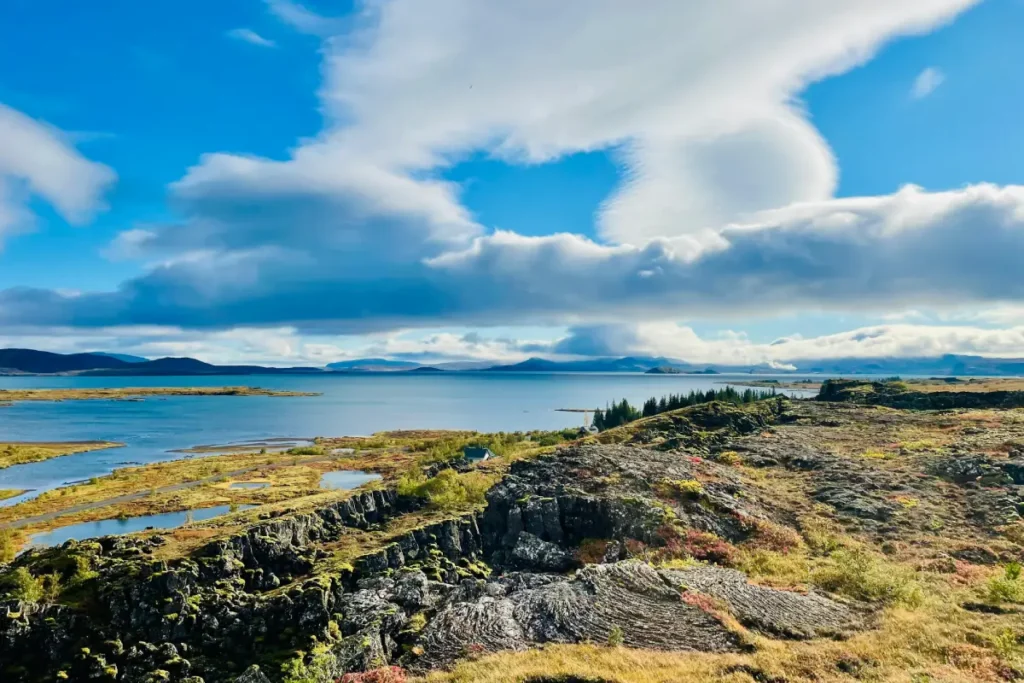
For a first visit to Þingvellir, allow around 45–60 minutes. This gives you enough time to explore the main walking areas without making the rest of the day feel rushed.
If you want coffee or a quick breakfast before continuing, you can pop into either the Þingvellir Visitor Centre or the Leirar Service Centre, both of which offer simple food and drinks within the park.
Tip: Start at the upper viewpoint before walking down into Almannagjá. It gives you a good sense of the area before you explore it on foot.
Parking at Þingvellir
| Parking Area | Location |
|---|---|
| P1 – Hakið | Beside the Visitor Center and Almannagjá viewpoint |
| P2 – Efri-Vellir | Near Öxarárfoss waterfall |
| P3 – Langistígur | A quieter parking area with hiking trails |
| P5 – Valhöll | Close to Þingvellir Church and the Silfra fissure |
As of 2026, parking costs 1,000 ISK for a standard family car with up to 5 seats. The fee authorizes parking for the day of payment in all parking lots within Þingvellir National Park (P1–P3 and P5).
Second Stop: Geysir Geothermal Area
From Þingvellir, the drive to the Geysir geothermal area usually takes around 45–55 minutes.
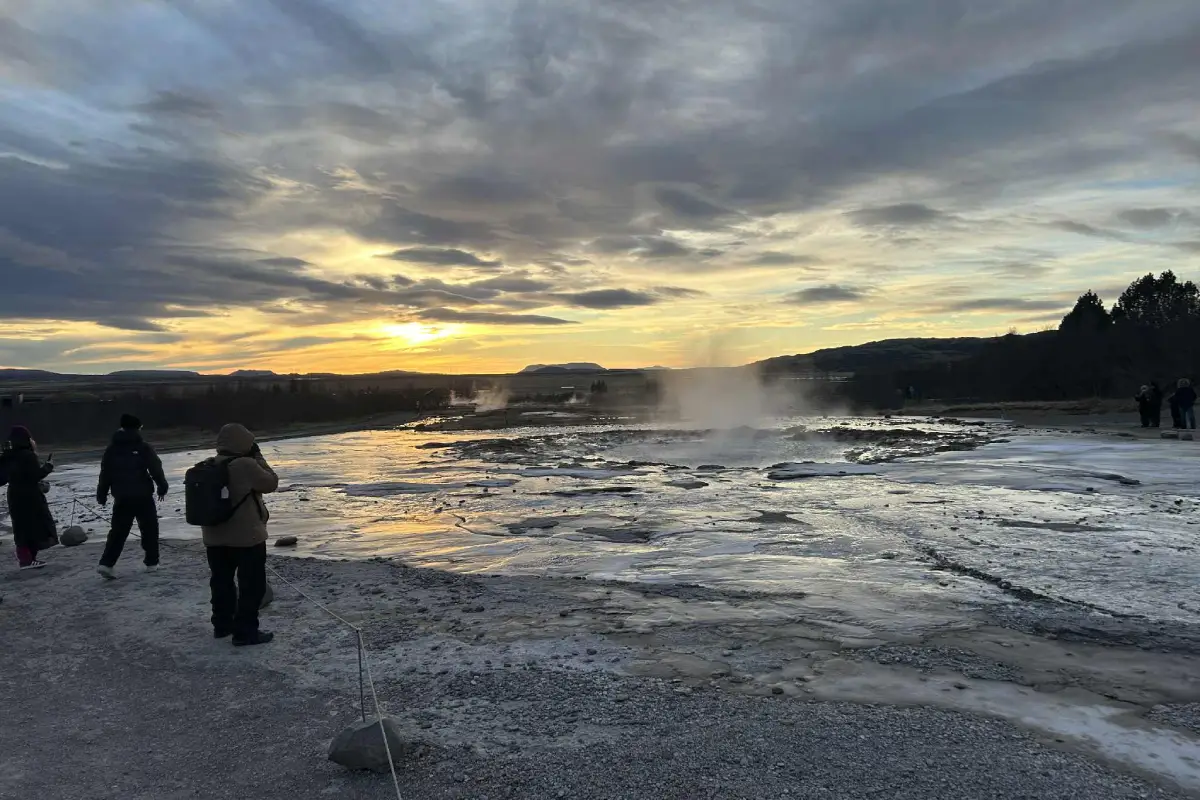
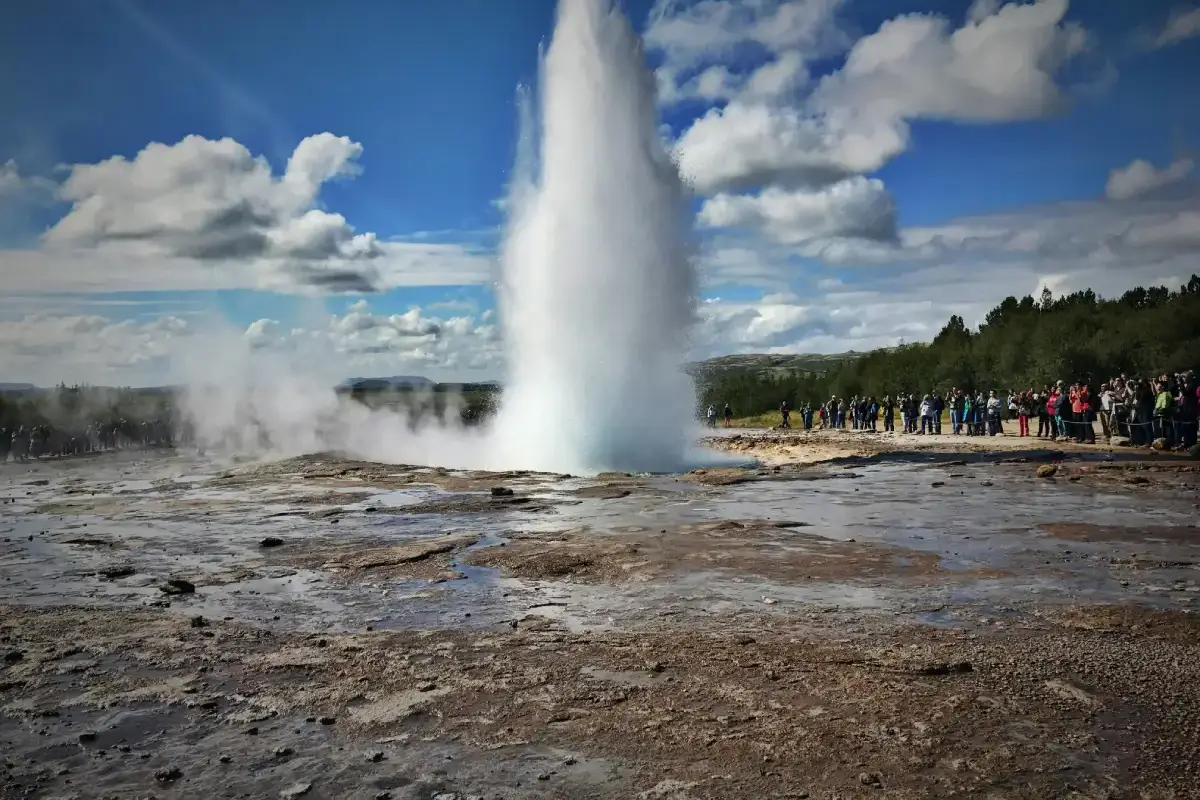
The main attraction here is Strokkur, an active geyser erupting every 5–10 minutes and sending boiling water high into the air. Because eruptions happen so frequently, most visitors are able to see several eruptions during a relatively short stop at the geothermal area.

Nearby lies the original Great Geysir, the geyser that gave the phenomenon its name. Although mostly dormant today, it once erupted water up to 70 meters high. The area is filled with steaming vents, bubbling mud pools, and geothermal activity spread throughout the site
Time at Geysir
Most visitors spend around 30–60 minutes at Geysir, depending on how much time they spend walking around the geothermal area or waiting to see multiple Strokkur eruptions.
This stop is often busiest between late morning and early afternoon, especially during summer.
Parking at Geysir
A large parking area is located near the visitor center with short walking access to the geothermal area.
As of 2026, parking fees start from 1,000 ISK for a standard car with up to 5 seats and are payable online or through the Parka app or the EsayPark app.
| Geysir Visitor Center |
|---|
| • restaurants and cafés |
| • restrooms |
| • souvenir shops |
| • visitor information |
From Geysir, it takes only around 10–15 minutes to reach Gullfoss waterfall.
Tip: On the drive between Geysir and Gullfoss, make a short stop near Brú Horse Farm if you would like to see Icelandic horses up close. The parking area and horses are right beside the road, so the stop does not usually add much time.
Third Stop: Gullfoss Waterfall
Gullfoss, meaning “Golden Falls,” drops in two stages into a deep canyon carved by the Hvítá river and is considered one of Iceland’s most iconic waterfalls and a main highlight of the Golden Circle route. It is one of those places that still manages to surprise you, even if you have seen it many times before, especially once you stand near the canyon and feel the scale and force of the waterfall in person.
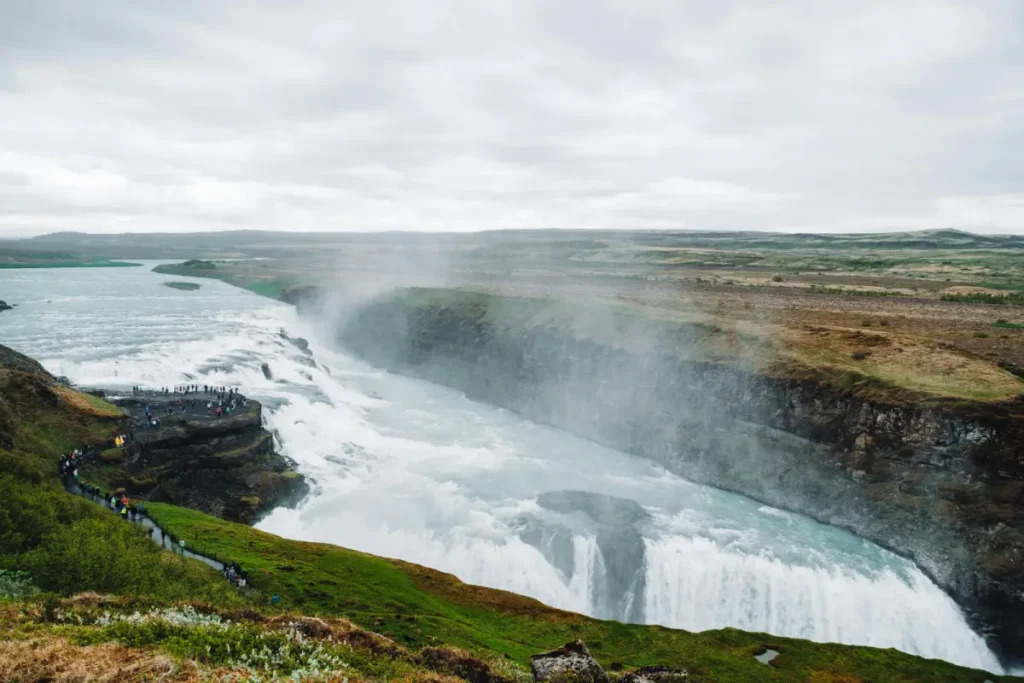
On clear days, the waterfall often creates visible mist and rainbows near the viewing areas.
Time at Gullfoss
Allow around 45 minutes to 1 hour for the viewing platforms and walking paths.
Parking and Facilities
Two parking areas are located near the waterfall. The lower parking lot is reserved for buses, while the upper parking area beside the visitor center is intended for regular cars. The upper parking lot is also only a few minutes’ walk from the waterfall.
Parking is currently free.
Returning to Reykjavík
After Gullfoss, continue south along Route 35 before joining Route 1 back toward Reykjavík. The drive usually takes around 1.5 hours without additional stops.
In total, the Golden Circle usually involves around 3.5–4 hours of driving and roughly 6–8 hours overall, including sightseeing stops.
Optional Stops Along the Golden Circle
If you have extra time, several interesting stops can easily be added to your Golden Circle itinerary without taking you far off the main route.
Brúarfoss Waterfall
Brúarfoss is located between Þingvellir and Geysir. What usually stands out first is the color of the water. It has this bright turquoise tone that feels almost unreal against the dark, narrow lava canyon.
A short walking trail leads from the parking area to the waterfall.
Parking currently costs 750 ISK. Facilities are limited, but restrooms are available at the parking area.
Friðheimar Greenhouse Restaurant
About 20 minutes from Gullfoss, Friðheimar offers a very different atmosphere from most stops along the route. Inside the greenhouse, tomatoes are grown year-round using geothermal energy from the area.
Tip: If you want to eat at Friðheimar, book a table in advance, especially for summer visits. If you cannot get a reservation, Vínstofan on the same grounds is a good backup option.
Kerið Volcanic Crater
Kerið is one of the easiest stops to add on the return drive toward Reykjavík because it requires very little additional time or walking.
You usually do not need a long stop at Kerið, which makes it a good final stop on the route.
As of 2026, the entrance fee is 600 ISK per person.
Secret Lagoon
The Secret Lagoon, located in Flúðir, is one of the oldest geothermal pools in Iceland. If you are not in a rush or have enough time left in the day, we think it is a worthwhile stop to add and recharge a bit before heading back to Reykjavík.
Where to Eat Along the Golden Circle Route
Popular stops include:
| • Friðheimar tomato farm |
| • Mika Restaurant |
| • Efstidalur dairy farm |
| • Geysir Center restaurants |
| • Gullfoss Visitor Center café |
Best restaurants on the Golden Circle
Read More →Practical Tips for the Golden Circle
Avoid the busiest hours
Most tour buses start their pick up from 09:00. Starting earlier usually creates a noticeably calmer experience, especially at Gullfoss and Geysir.
Weather and road conditions
Icelandic weather changes quickly, and conditions can shift surprisingly fast between stops. We have seen Gullfoss covered in mist and heavy wind while conditions remained relatively calm only a short drive away near Geysir.
Rain, wind, icy roads, and poor visibility can all affect the pace of the day.
Daylight and timing
During winter, daylight is limited so start your journey on time to arrive in daylight to every stop.
Summer evenings, on the other hand, often become one of the best times to experience parts of the Golden Circle once larger tour groups begin returning toward Reykjavík.
Fuel, charging, and snacks
Fuel stations and charging points exist along the route, but filling up in Reykjavík before departure is usually easier.
It’s cheaper to get snacks in Reykjavik then along the route.
Clothing
Dress in layers and bring waterproof outerwear, particularly near Gullfoss where wind and waterfall mist frequently make conditions feel colder than expected.
Golden Circle by Minibus
Visit Þingvellir, Geysir and Gullfoss in a comfortable small group minibus tour from Reykjavík.
Golden Circle by Minibus
Common Mistakes When Visiting the Golden Circle
| • Starting too late in the day in winter |
| • Trying to add too many extra stops |
| • Not checking weather or road conditions before departure |
| • Underestimating how busy the main attractions can become |
Best time to visit the Golden Circle?
Read More →Golden Circle FAQ
Can you do the Golden Circle in one day?
Yes, you can do the Golden Circle in one day. It is one of the easiest day trips from Reykjavík, and most travelers can comfortably visit the main stops — Þingvellir National Park, Geysir, and Gullfoss — with time for a few extra stops along the way.
How long does the Golden Circle take?
Most travelers spend about 6–8 hours exploring the Golden Circle, including stops at Þingvellir, Geysir, and Gullfoss.
Do you need a 4×4 for the Golden Circle?
No. The roads along the Golden Circle are paved and accessible year-round, although winter conditions may require extra caution.
What are the main stops on the Golden Circle?
The three main attractions on the Golden Circle are Þingvellir National Park, the Geysir Geothermal Area, and Gullfoss waterfall.
What is the best time of day to visit the Golden Circle?
Starting early in the morning is often the best option, especially in summer when tour bus traffic increases later in the day. In winter, an early start is also important because daylight hours are much shorter.