
Best Time to Visit the Golden Circle: What Each Season Looks Like

By Stefan Bessi
Local Travel Expert
Last updated: March 6, 2026
Intro
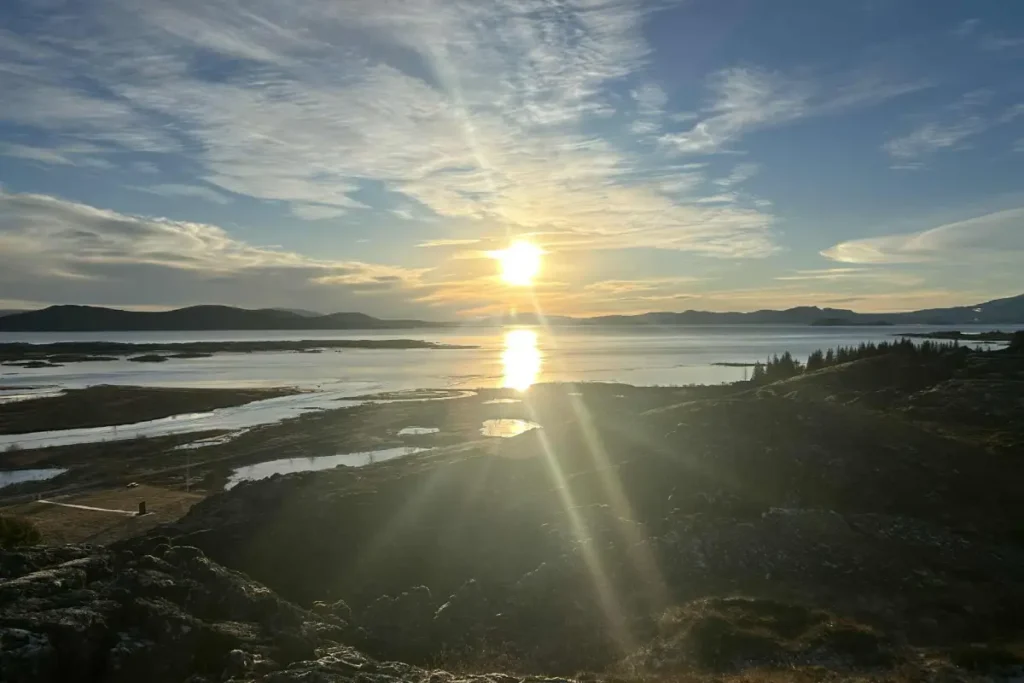
The Golden Circle is one of Iceland’s most popular travel routes, but the experience changes dramatically depending on the season. From the midnight sun in the summer to snowy landscapes and the Northern Lights in the winter, each season offers a different way to explore the route. You can easily explore the route in a single day, as it is located within a short driving distance from Reykjavík.
Because the Golden Circle is accessible year-round, many travelers wonder what the best time to visit it is and how the experience changes throughout the seasons. Snow-covered landscapes, midnight sun, autumn colors, and spring meltwater all create very different atmospheres along the route.
Understanding how the seasons affect the Golden Circle can help you decide when to visit and what to expect.
Overview: Golden Circle by Season
| Best for long daylight hours: Summer |
| Best for fewer crowds: Winter |
| Best for photography: Autumn and Winter |
| Best for Northern Lights: Winter |
| Best shoulder seasons: Spring & Autumn |
| Longest daylight: June |
| Darkest Month: December |
| Most stable driving conditions: Summer |
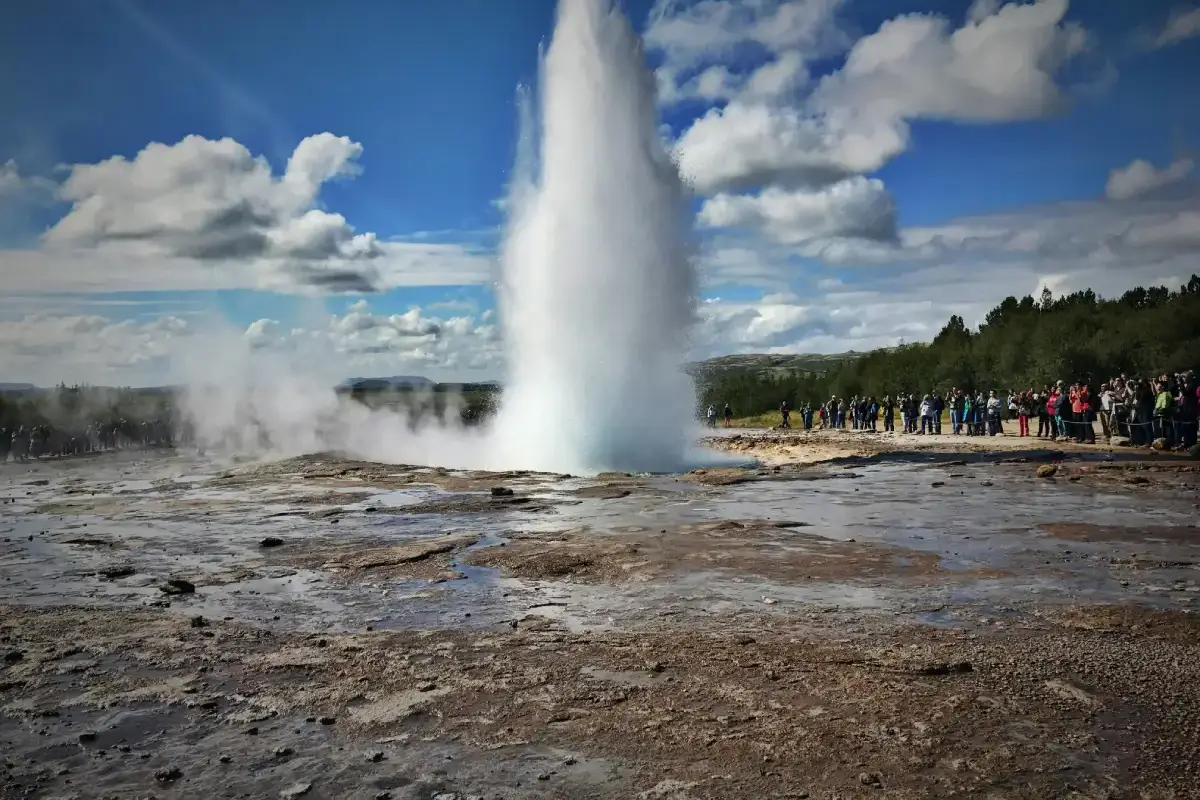
Golden Circle by Minibus
Visit Þingvellir, Geysir and Gullfoss in a comfortable small group minibus tour from Reykjavík.
Golden Circle by Minibus
Golden Circle by Season: Comparison
| Season | Highlights | Pros | Avg. Temp | Things to Consider |
|---|---|---|---|---|
| Spring (April–May) | Melting snow, powerful waterfalls | Fewer crowds, fresh landscapes | 3–10°C (37–50°F) | Weather can change quickly |
| Summer (June–August) | Midnight sun, green landscapes | Long days, easiest driving | 10–15°C (50–59°F) | Peak tourist season |
| Autumn (September–October) | Colorful landscapes, darker nights | Good photography, fewer crowds | 5–10°C (41–50°F) | Cooler temperatures |
| Winter (November–March) | Snowy scenery, Northern Lights | Dramatic landscapes | -1 to 4°C (30–39°F) | Short daylight hours |
How Long the Golden Circle Takes
The Golden Circle loop covers roughly 230 km (140 miles) from Reykjavík and back.
Driving the full route without stops takes about 3.5–4 hours, but most travelers spend 6–8 hours visiting the main attractions and optional stops along the way.
| Season | Typical Trip Length | Roads |
|---|---|---|
| Summer | 6–10 hours long daylight hours | Excellent |
| Spring | 6–8 hours | Variable |
| Autumn | 6–8 hours | Good → Variable |
| Winter | 5–7 hours due to limit daylight | Challenging |
What Each Season Looks Like
Spring: Quiet Landscapes and Powerful Waterfalls
Spring on the Golden Circle feels like Iceland slowly waking after winter. Snow begins to melt, rivers swell with meltwater, and the landscape gradually turns green again.
Because the busy summer has not yet begun, spring can be one of the quietest times to explore the route.
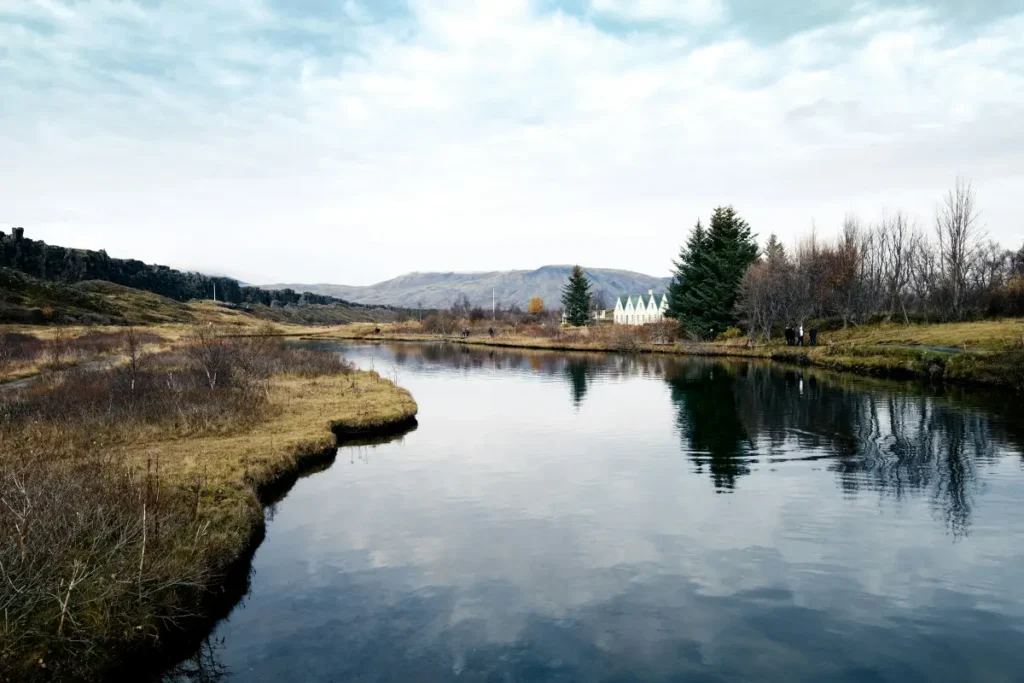
At Þingvellir National Park, walking through the Almannagjá rift valley becomes especially pleasant as the landscape begins to brighten with early vegetation.
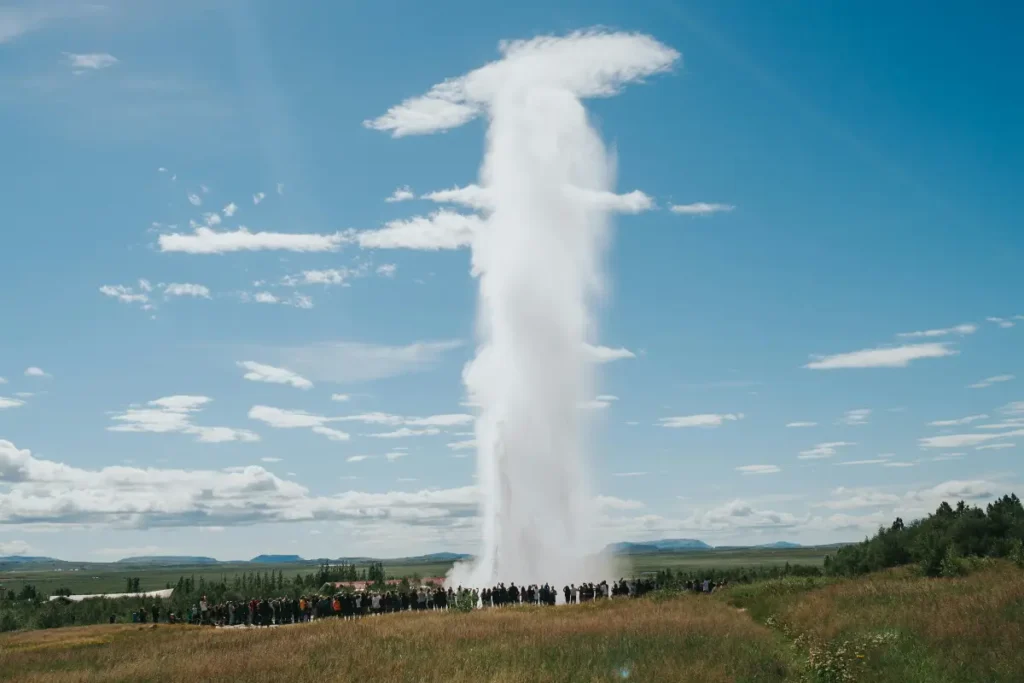
At Geysir, the cooler spring air makes the geothermal steam especially visible as Strokkur erupts every few minutes.
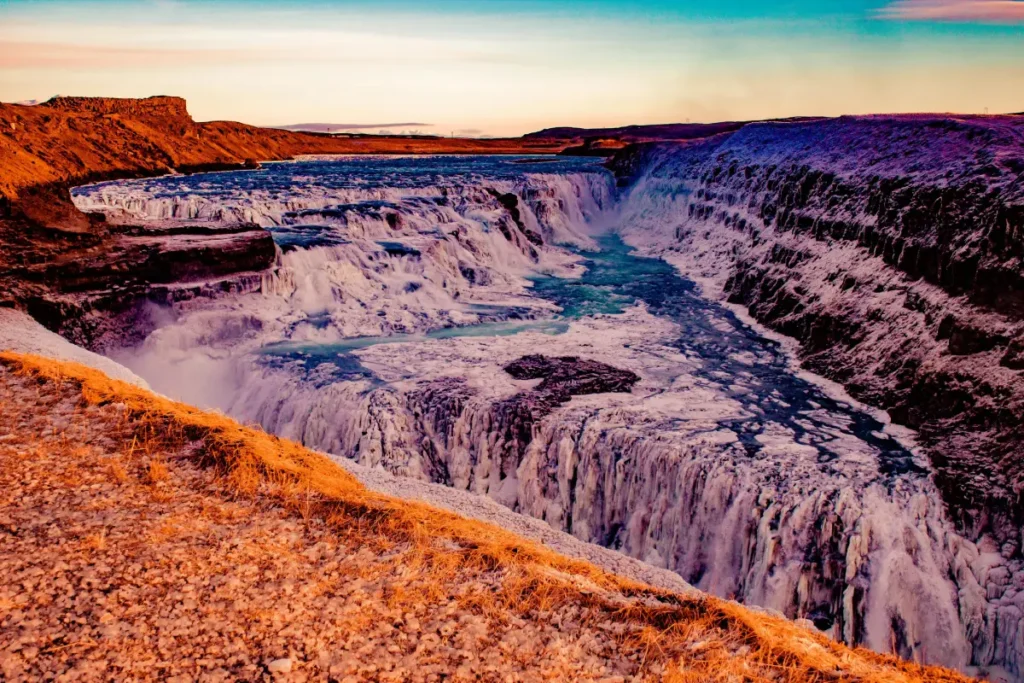
Meanwhile, Gullfoss waterfall is often particularly powerful during spring due to increased water flow from melting snow in the highlands.
Spring offers a calm balance between winter’s dramatic scenery and summer’s accessibility.
Summer: Long Days and Lush Scenery
Summer is the most popular time to visit the Golden Circle. Between June and July, Iceland experiences nearly continuous daylight, giving travelers plenty of time to explore the route at a relaxed pace.
The landscapes become greener, and hiking trails around Þingvellir National Park are fully accessible.
At Geysir, the geothermal valley remains active year-round, but summer’s warmer temperatures make it comfortable to explore the surrounding walking paths.
The powerful cascade at Gullfoss is also particularly impressive during the summer when glacial meltwater increases the river’s flow.
Because summer is peak tourist season in Iceland, the Golden Circle can become busy during midday. Many travelers start early or visit later in the evening when crowds are smaller.
Autumn: Colorful Landscapes and Fewer Crowds
Autumn transforms the Golden Circle landscape with vibrant seasonal colors.
Vegetation around Þingvellir shifts from green to shades of yellow, red, and orange, creating beautiful contrasts against the dark volcanic terrain.
Autumn is also one of the best seasons for photography. Lower sun angles create soft lighting across the rift valley and surrounding landscapes.
By September, nights become dark enough again for the Northern Lights to appear, meaning some travelers combine a Golden Circle day trip with evening aurora viewing.
Autumn offers a particularly balanced experience: cooler temperatures, fewer visitors, and excellent photographic conditions.
Winter: Snowy Landscapes and Northern Lights
Winter transforms the Golden Circle into an entirely different environment.
The snow-covered cliffs and lava fields at Þingvellir make the rift valley even more dramatic.
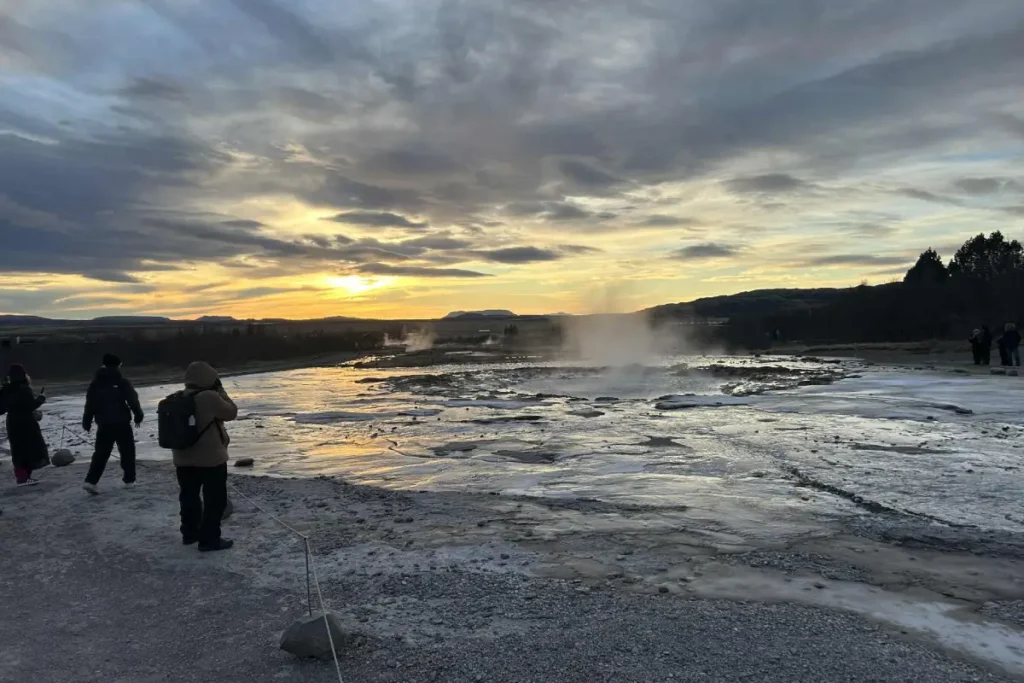
At Geysir, geothermal steam rising into cold winter air creates a striking atmosphere as Strokkur continues its regular eruptions.
Gullfoss waterfall, on the other hand, is one of Iceland’s most beautiful winter sights. Ice forms along the canyon walls while the river continues to roar through the gorge.
Winter also brings the possibility of seeing the Northern Lights. Because many parts of the Golden Circle have very little light pollution, the area can offer excellent aurora viewing conditions on clear nights.
Why winter is a good time to visit the Golden Circle?
Read More →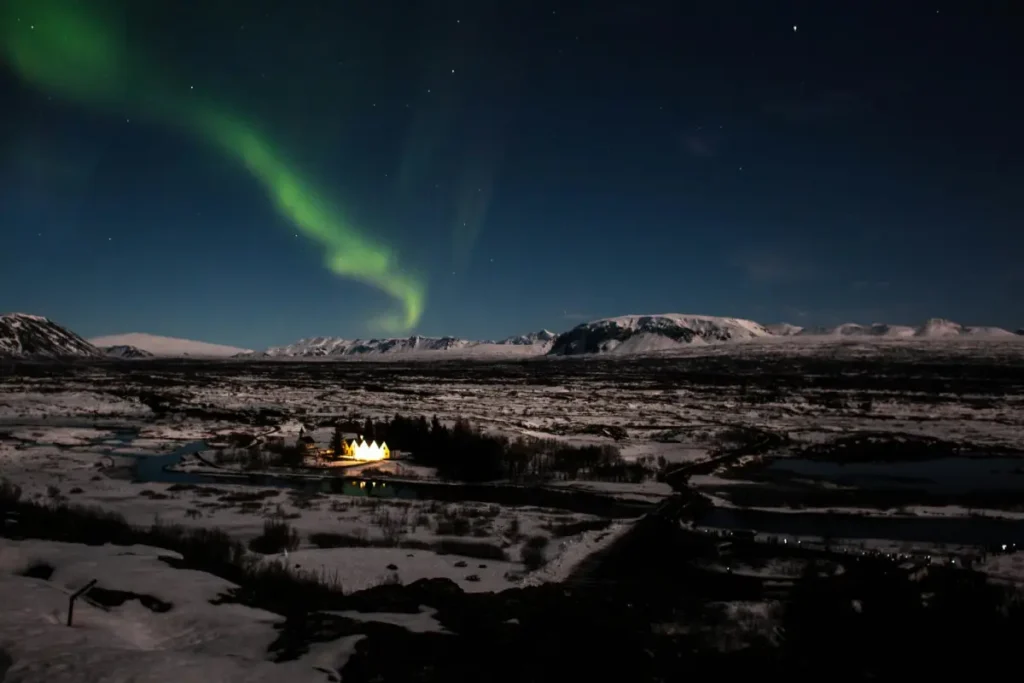
However, winter visitors should remember that daylight is limited, often lasting only 4–6 hours during midwinter months, so starting early helps ensure enough time to explore.
Which Season Is Best for Visiting the Golden Circle?
There is no single best time to visit the Golden Circle. Each season offers a different experience.
| Spring: quieter roads and powerful waterfalls |
| Summer: long daylight hours and the easiest driving conditions |
| Autumn: colorful landscapes and fewer crowds |
| Winter: snowy scenery and the chance to see the Northern Lights |
Because the route remains accessible throughout the year, travelers can enjoy the Golden Circle during any season depending on the type of experience they prefer.
Golden Circle Seasonal FAQ
When is the best time to visit the Golden Circle?
The Golden Circle can be visited year-round. Summer offers the longest daylight hours, while winter provides snowy landscapes and Northern Lights opportunities.
Is the Golden Circle accessible in winter?
Yes. The main roads along the Golden Circle are paved and maintained throughout winter, although weather conditions may require slower and more cautious driving.
Can you see the Northern Lights on the Golden Circle?
Yes. Many areas along the Golden Circle have relatively low light pollution, making places like Þingvellir and the countryside near Gullfoss good locations for aurora viewing on clear winter nights.
Which season has the fewest crowds on the Golden Circle?
Autumn and winter generally have fewer visitors compared with the busy summer months.
How long does it take to drive the Golden Circle?
Driving the full loop takes about 3.5–4 hours without stops, but most travelers spend 6–8 hours exploring the attractions.
Is the Golden Circle worth visiting in winter?
Yes, absolutely. Winter offers dramatic scenery with snow-covered landscapes and the possibility of seeing the Northern Lights in the evening, making it one of the most atmospheric times to visit the route.